Robot Fleet Management for Reliable Robot Operations
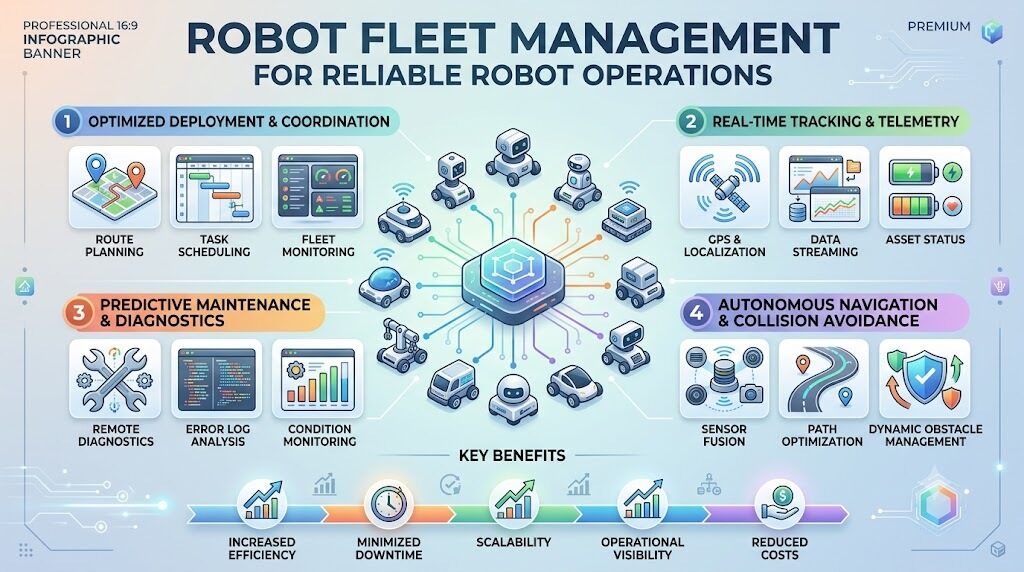
Managing one robot can be simple. Managing many robots is harder. Teams need to track each robot, plan tasks, and fix problems fast. Robot fleet management helps teams handle this work from one place.
This system can support robots in warehouses, factories, hospitals, and other work areas. It helps teams see robot status, work progress, battery levels, and task updates. As robot use grows, fleet tools can make daily work easier.
What Is Robot Fleet Management?
Robot fleet management means managing many robots through one system. The system helps teams control robot tasks, track robot health, and check daily activity. It gives teams a clear view of the whole robot fleet.
A fleet system can collect data from many robots at once. Teams can use this data to find delays, low batteries, or robot faults. They can also check which robots are working and which need help.
For example, a warehouse may use 50 mobile robots. The team can watch these robots from one dashboard. This saves time and helps workers respond to problems faster.
Why Is Robot Fleet Management Important?
Large robot fleets can create many daily tasks. Workers must check robot status, plan jobs, manage charging, and handle faults. A fleet system brings much of this work into one place.
Good fleet management also helps teams use robots better. It can reduce idle time and help robots stay ready for work. Teams can also find common problems by studying robot data.
For example, a robot may stop often because its battery gets low. The system can show this pattern to the team. Workers can then change charging plans and reduce work delays.
How Does Robot Fleet Management Work?
Robot fleet management starts by connecting robots to a central system. Each robot sends useful data about its status and work. The system then collects and shows this data for the team.
The system can also send tasks to different robots. It may choose a robot based on location, battery level, or current work. This helps teams avoid sending the same robot to every task.
Imagine a warehouse with many delivery jobs. The system can assign each job to a nearby robot. A robot with a low battery can return for charging instead of taking another job.
What Features Does a Fleet Management System Provide?
Fleet systems often provide tools for robot control and monitoring. Teams can view robot locations, battery levels, task status, and alerts. These features help workers understand what happens across the fleet.
Some systems also support task planning and route control. They can help teams manage charging and respond to robot faults. Data reports can show patterns in robot use over time.
For example, a team may see that robots wait too long during one shift. Managers can study the data and change task schedules. This can help improve the use of the robot fleet.
Robot Monitoring and Real-Time Tracking
Robot monitoring helps teams see what each robot is doing. The system can show if a robot is active, idle, charging, or facing an error. This gives workers a clear view of fleet activity.
Real-time tracking can also help teams find robots quickly. This matters in large warehouses and factories where robots move often. Workers can check robot locations without searching the whole site.
For example, a robot may stop in the middle of a busy area. The team can see its location and status on the system. Workers can then inspect the robot and clear the problem.
Task Assignment and Robot Scheduling
Task assignment decides which robot should handle each job. A fleet system can use simple rules to make these choices. It can look at robot location, battery level, and current workload.
Smart scheduling can help prevent some robots from doing too much work. It can also reduce travel time between tasks. This can make robot operations more balanced and efficient.
For example, three robots may receive delivery requests at once. One robot may already be close to the first location. The system can assign that robot to save travel time.
Battery and Charging Management
Battery management is important for mobile robots. A robot with low power may stop during an important task. Fleet systems can help teams track battery levels across many robots.
The system can also help plan charging times. Robots can charge when they have fewer tasks or when their batteries reach a set level. This helps keep more robots ready for work.
For example, a warehouse may have charging stations with limited space. The system can help decide which robots need charging first. This can reduce charging delays during busy work hours.
Robot Health and Maintenance
Robot health monitoring helps teams find faults early. The system can collect data from robot sensors and devices. This data can show signs of wear or other problems.
Regular maintenance can help reduce unexpected robot stops. Teams can use fleet data to plan checks before serious faults happen. This can support safer and more stable robot operations.
For example, one robot may show repeated motor warnings. The team can inspect it before the motor fails. Early action can reduce repair time and avoid longer work delays.
Benefits of Robot Fleet Management
Robot fleet management can make large robot operations easier to control. Teams get one place to check robot activity, tasks, alerts, and health. This can reduce manual work and improve daily visibility.
It can also help teams use their robots more effectively. Better task planning can reduce idle time and unnecessary travel. Better monitoring can help workers find problems before they affect many tasks.
For example, a warehouse may use fleet data to improve robot schedules. The team can find busy periods and change task plans. Over time, these changes can help the operation run more smoothly.
Challenges in Robot Fleet Management
Managing a robot fleet can still create challenges. Robots may use different hardware, software, or communication systems. This can make it harder to manage all robots through one platform.
Network problems can also affect robot communication. A poor connection may delay task updates or status data. Security is another concern because connected robots can exchange important operational data.
For example, a factory may add robots from several vendors. Each robot may use different control systems. The team may need tools that support different robot types.
Where Is Robot Fleet Management Used?
Robot fleet management is used in many industries. Warehouses use it for picking, moving, and delivery tasks. Factories use it to move parts and materials between work areas.
Hospitals can also use robots for transport tasks. Robots may carry medicines, supplies, or other items around large buildings. Fleet systems help staff track these robots and their tasks.
Other uses include hotels, airports, farms, and research centers. Each place may have different robot needs. The main goal remains the same: manage many robots in a clear and simple way.
How Teams Can Improve Fleet Management
Teams should start by tracking the data that matters most. This may include robot uptime, battery use, task time, and fault rates. Clear data helps teams find areas that need improvement.
Teams should also review fleet performance on a regular basis. Small changes to routes, schedules, and charging plans can make a difference. Training workers to use fleet tools is also important.
For example, a team may find that robots wait often near one charging area. They can change charging rules or add better task timing. This can reduce waiting and keep more robots ready.
The Future of Robot Fleet Management
Robot fleets will likely become larger and more complex. More businesses are using robots for repeated work and material movement. This creates a need for better tools to manage many machines.
Future fleet systems may use more automation and smarter planning. They may help robots share tasks, avoid delays, and respond to changing work needs. Better data may also help teams plan maintenance earlier.
The main goal will remain simple. Teams need reliable robots that can complete work safely and on time. Good fleet management can help make that goal easier to achieve.
Conclusion
Robot fleet management helps teams control many robots from one system. It supports task planning, robot tracking, battery checks, maintenance, and daily monitoring. These tools can make large robot operations easier to manage.
The value becomes clearer as robot fleets grow. Teams need simple ways to understand robot activity and fix problems quickly. A strong fleet system can give them the visibility needed for daily work.
For warehouses, factories, hospitals, and other sites, fleet management can support better robot use. It helps connect robot data with daily operations. With the right approach, teams can manage growing robot fleets with greater control.