Farm Record Keeping Made Easy: A Simple Guide for Better Rural Planning
Introduction
Good farm records can make farming easier. Farmers make many decisions every season. They buy seeds, prepare fields, manage workers, use water, and sell crops. Without records, it can be hard to remember what worked. Simple records can show past farm choices and costs. They can also help farmers plan future crops. Clear farming information in Hindi can make record keeping easier for rural families. Farmers may also need information about government schemes for farmers. Good records can help them prepare documents and questions. MAHTO shares rural knowledge in simple language. It covers agriculture, schemes, livestock, markets, and village businesses. Farmers can use such information for learning. Important government, banking, and technical details should always be confirmed through official or local sources.
What Does Farm Record Keeping Mean?
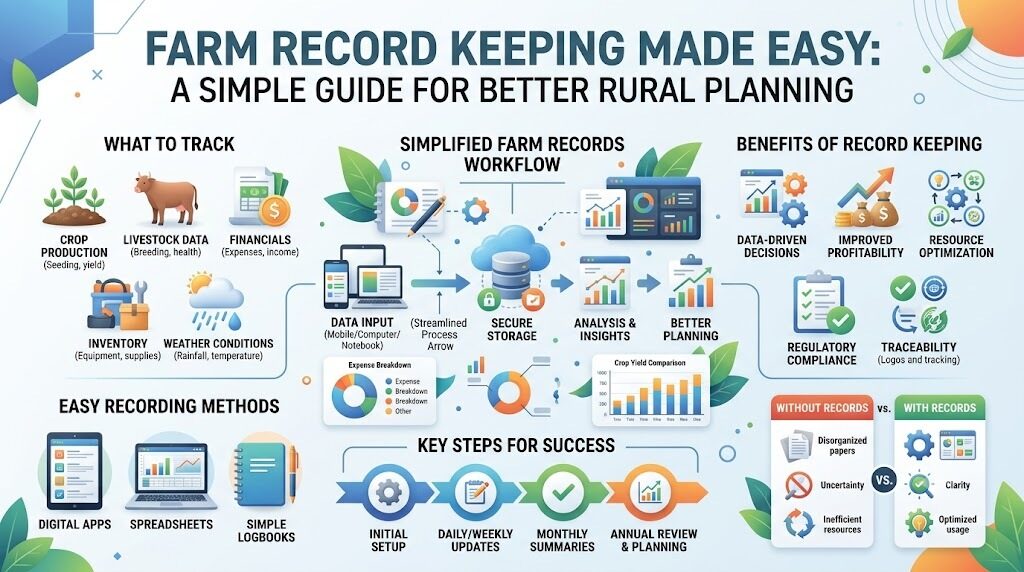
Farm record keeping means writing down important farm activities. These records can include crop names, field details, costs, sales, and dates. Farmers do not need complicated software. A notebook can work for a small farm. A simple phone note can also help. The main goal is consistency. Farmers should record information soon after an activity. This reduces memory errors. Records can also show which crops perform better over time. They may reveal repeated costs or common problems. Farmers can then discuss these findings with local experts. Good farming information in Hindi can explain what information is worth recording. The best record system is one that a farmer can maintain regularly.
Why Farm Records Matter
Farming involves many small decisions. Farmers may forget when they bought seeds. They may also forget how much they spent on transport. Later, this makes farm planning difficult. Records can create a clear picture. They can show where money goes. They can also show which activities take more time. Farmers can compare different crop seasons without depending only on memory. Records can support better budgeting. They can also help farmers prepare questions for banks or agriculture offices. When exploring government schemes for farmers, organized documents can make preparation easier. Records do not guarantee approval for any scheme. They simply help farmers keep information ready. This makes farm management more organized.
Farming Information in Hindi: Making Records Simple
Many farmers may feel that record keeping is difficult. It does not have to be. Farming information in Hindi can explain simple record formats. Farmers can start with five basic details. These can include crop, field, activity, expense, and result. They can add more details later. A family can also divide record duties. One person can record purchases. Another can note sales. Children can help with simple writing if appropriate. Farmers should keep important papers in a safe place. Digital copies may also help when possible. MAHTO.IN explains rural topics in simple language. Farmers can use this knowledge while building their own record system. The aim is better planning, not more paperwork.
Government Schemes for Farmers
Farm records can support preparation for different rural programs. Farmers may need land records, identity details, crop information, or bank information. Exact requirements depend on the program. Farmers should never assume that one document list applies everywhere. People searching for government schemes for farmers should first identify the scheme they need. They should then check the official requirements. Local agriculture offices can explain difficult steps. Banks can guide farmers about eligible credit services. Farmers should keep submitted documents safely. They should also record application details when possible. This can make later follow-up easier. MAHTO.IN can explain general scheme concepts. It cannot replace official government instructions.
PM Kisan eKYC and Personal Records
Farmers often need to manage identity and farm information carefully. PM Kisan eKYC is an identity verification process for eligible PM Kisan beneficiaries. Farmers should make sure their details are correct. They should use the official process for verification. If there is a mismatch, the farmer may need local support. Farm records can help families keep their information organized. However, farm records do not replace the official verification process. Farmers should also protect private information. Banking passwords and verification codes should never be shared with unknown people. PM Kisan eKYC should be treated as a separate official process. MAHTO.IN can help explain its basic meaning in simple language.
Kisan Credit Card and Farm Records
The Kisan Credit Card can provide eligible farmers access to agricultural credit. Farmers may need to discuss their farm needs with a bank. Clear farm records can help them understand their own expenses. They can also support better budgeting before borrowing. Farmers should write down expected costs before requesting credit. They should understand repayment terms carefully. Bank rules can differ based on the applicant and product. Farmers should ask the concerned bank for current details. A Kisan Credit Card should not be treated as free money. It is credit that must be managed responsibly. Good records can help farmers avoid borrowing without a clear purpose.
How to Check Mandi Prices and Record Sales
Farmers need good sales records. They should note the crop sold, quantity, market, and selling conditions. Learning how to check mandi prices can improve this process. Farmers can record the market information they checked before selling. They can then compare it with the final selling result. This does not predict future prices. It simply helps farmers understand past decisions. Prices can change because of supply, demand, quality, and location. Transport and loading costs also matter. Farmers should record these costs when possible. Over time, such records can show which selling choices worked better. Reliable market information should come from trusted sources.
How to Grow Paddy With Better Records
People searching how to grow paddy often focus on seed, soil, water, and crop care. Record keeping can support all these activities. Farmers can note when they prepared the field. They can record the crop variety and major farm activities. They can also note weather changes and irrigation events. These records can help farmers compare future paddy seasons. Farmers should follow local agriculture advice for crop inputs. They should not copy exact input amounts from another farm. How to grow paddy depends on local soil, water, weather, and farming methods. Simple records can help farmers see which practices worked better in their own fields.
How to Start Organic Farming With Records
Record keeping becomes especially useful for farmers exploring organic practices. People learning how to start organic farming should record farm inputs carefully. They can note compost sources, crop rotation, field activities, and harvest details. Such records can help farmers understand their own system. They may also become useful if a buyer or certification process requires information. Farmers should learn local organic standards before making formal claims. They should not label produce based only on personal belief. Organic farming requires careful soil and crop management. Starting with a small area can make record keeping easier. Farmers can then improve their system gradually.
How to Start Goat Farming With Simple Records
People learning how to start goat farming should keep animal records from the beginning. Records can include animal identification, births, sales, feed costs, and basic health observations. Farmers should avoid making medical decisions from online advice. A veterinarian should handle illness and vaccination guidance. Records can help farmers notice changes in animal performance. They can also show how much the activity costs. Families should record buying and selling details clearly. Local market demand should also be studied. Goat farming requires daily care. Good records can make this work more organized. A small beginning can help new farmers build good habits.
Livestock Farming Information and Record Keeping
Good livestock farming information includes more than animal feeding. Farmers also need to understand records. They should track animal numbers and important farm events. They can record purchases, sales, feed costs, and veterinary visits. These details help families understand their livestock activity. Records can also show whether the herd is growing or shrinking. Farmers should keep animal health information safely. Sick animals should receive professional veterinary attention. Different animals need different care. Farmers should not apply one routine to every animal. Good records support discussions with veterinarians and livestock experts. They also help families plan future animal purchases more carefully.
Village Business Ideas and Basic Accounting
Rural families may run businesses alongside farming. These can include food products, repair services, dairy activities, or local services. People exploring village business ideas should record every major expense. They should also record sales. This helps show whether a business is actually working. A busy business may still lose money if costs are too high. Simple records can show where money goes. Families should separate business money from personal spending when possible. They should also track credit given to customers. Clear records can reduce confusion later. Village business ideas work best when they match local demand and available skills. Farmers should study the market before investing heavily.
Farm Records at a Glance
| Record Type | What It Tracks | Why It Helps |
|---|---|---|
| Crop record | Crop and field activities | Supports future crop planning |
| Expense record | Farm spending | Helps with budgeting |
| Sales record | Crop sales and market details | Supports selling analysis |
| Water record | Irrigation and water events | Helps review water use |
| Livestock record | Animals and key events | Supports animal management |
| Business record | Costs and sales | Shows business performance |
Common Mistakes Farmers Make
1. Recording too late: Delayed entries can cause missing information.
2. Keeping only expense records: Sales and farm activities matter too.
3. Using unclear notes: Short but clear descriptions work better.
4. Mixing personal and farm expenses: Separate records make review easier.
5. Losing important papers: Documents should stay in a safe place.
6. Ignoring small costs: Small expenses can add up.
7. Forgetting market details: Sale records should include useful market information.
8. Not updating livestock records: Animal numbers can change quickly.
9. Depending only on memory: Written records provide stronger reference.
10. Making records too complex: A simple system is easier to maintain.
A Simple Example
A small farming family wanted to understand its farm expenses better. They started with one notebook. They recorded crop activities, purchases, sales, and transport costs. They used farming information in Hindi to learn simple record methods. The family also explored government schemes for farmers and kept copies of important documents. They checked their PM Kisan eKYC status separately through the official process. They asked their bank about the Kisan Credit Card. Before selling crops, they learned how to check mandi prices. They also recorded paddy activities while studying how to grow paddy. Later, they explored how to start organic farming and how to start goat farming. MAHTO.IN helped them understand these rural topics in simple language.
How MAHTO Can Help
Farmers need more than one type of information. Crop planning connects with markets. Markets connect with costs and rural finance. Livestock connects with daily records and local demand. MAHTO.IN provides simple rural knowledge across these areas. Readers can explore farming information in Hindi for easier learning. They can also understand government schemes for farmers without complex language. Other topics include PM Kisan eKYC and the Kisan Credit Card. Farmers can learn how to check mandi prices before selling produce. They can also explore how to grow paddy and how to start organic farming. Rural families can learn how to start goat farming and read useful livestock farming information. People exploring village business ideas can also find simple guidance. MAHTO.IN is an information platform, not an official authority.
FAQs
1. Why should farmers keep farm records?
Farm records help farmers remember important activities and expenses. They can show what happened during a crop season. This can support better planning later. Simple farming information in Hindi can help farmers choose useful records. A notebook is enough for many small farms.
2. Can records help with government schemes for farmers?
Yes, organized records can help farmers keep documents and farm details ready. However, requirements vary by scheme. Farmers looking at government schemes for farmers should check official conditions first. Records do not guarantee approval. They simply help farmers organize information needed for applications or follow-up.
3. Should PM Kisan eKYC information be written in farm records?
Farmers can note basic verification details for their own reference, but PM Kisan eKYC must be completed through the official process. Private information should stay protected. If a mismatch appears, farmers should contact the proper support channel instead of sharing sensitive details with unknown people.
4. How can a Kisan Credit Card benefit from good records?
A Kisan Credit Card provides eligible farmers access to farm credit. Good records can help farmers understand their actual expenses before borrowing. Farmers can review crop costs and expected needs. They should still ask the bank about current eligibility, documents, repayment terms, and other conditions.
5. Why should farmers record mandi information?
Farmers learning how to check mandi prices can record the market information they reviewed before selling. They can then compare it with their final sale. This may help them understand past choices. Prices can change quickly, so old records should not be treated as current price information.
6. How can records help someone learning how to grow paddy?
People studying how to grow paddy can record field preparation, crop variety, irrigation events, and important crop activities. These notes can help compare different seasons. Farmers should still follow local agriculture advice. Records support learning, but they cannot replace expert guidance for crop inputs or disease control.
7. Why are records useful when learning how to start organic farming?
People learning how to start organic farming can record soil activities, natural inputs, crop rotation, and harvest details. These notes help farmers understand their farming system. They may also help with buyer or certification requirements when applicable. Farmers should learn local standards before making organic claims.
8. What records are useful when learning how to start goat farming?
People learning how to start goat farming can record animal purchases, births, sales, feed costs, and health observations. These records help families understand the activity better. A veterinarian should guide health and vaccination decisions. Farmers should also track market demand and basic operating costs.
9. Why is record keeping important in livestock farming information?
Good livestock farming information should include basic record keeping. Farmers can track animal numbers, purchases, sales, feed expenses, and veterinary visits. These details help families review their livestock activity. Records can also support discussions with animal experts. Farmers should keep health information safely and accurately.
10. Can village business ideas become easier to manage with records?
Yes. People exploring village business ideas should record sales and expenses from the beginning. This can show whether a business is actually making money. Families should track customer credit and major purchases too. MAHTO can help readers understand rural business concepts before they invest money.
Final Thoughts
Farm records may look simple, but they can be very useful. They help farmers remember important details. They also support better planning and budgeting. Farmers can record crop activities, costs, sales, livestock events, and business transactions. Farming information in Hindi can make these habits easier to learn. Farmers can also study government schemes for farmers, PM Kisan eKYC, and the Kisan Credit Card. Market planning becomes easier when farmers understand how to check mandi prices. Crop learners can record lessons from how to grow paddy. New farmers can track their progress while learning how to start organic farming or how to start goat farming. Good livestock farming information and village business ideas can support wider rural planning. MAHTO can help farmers learn these topics in simple language. Important decisions should always be confirmed with the right local authority or expert.