Household Cash Flow Planning: Bring Income, Bills, and Daily Spending Into Balance
Introduction
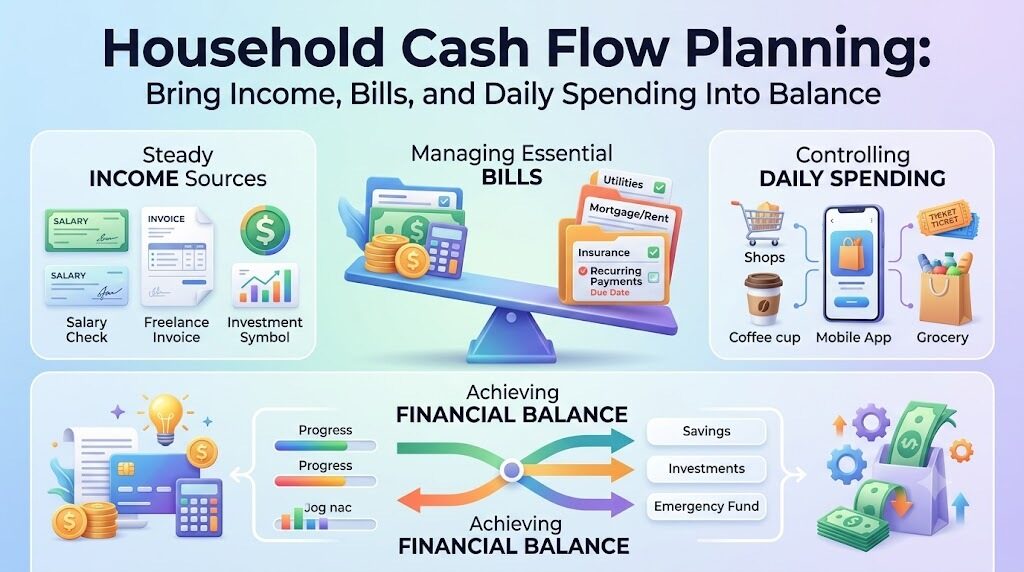
Household money can feel confusing even with regular income. Bills arrive on different days. Small purchases happen every day. Some payments repeat each month. Others appear only once in a while. This can make cash flow hard to see. Household cash flow planning helps bring these money movements together. It shows what comes in, what goes out, and what needs attention. An expense tracker India can help organize daily spending. A budget planner app India can also make planning easier. The goal is not to control every small choice. The goal is to understand the full money picture. MoneyVoid is being developed around this need. It aims to help people see spending patterns and reduce money confusion. Its planned tools may support families, individuals, founders, and finance teams. The focus stays on clearer money decisions and better financial awareness.
What Does Household Cash Flow Planning Mean?
Household cash flow planning means tracking money movement over time. Income enters the household through work or other sources. Expenses leave through bills, shopping, services, travel, and other needs. The timing of these movements also matters. A person may have enough income but poor timing. Several large bills may arrive during the same week. That can create pressure before the next income arrives. Cash flow planning helps show these timing gaps. It also separates regular costs from flexible spending. Regular costs can include rent, school fees, utilities, and loan payments. Flexible costs can include shopping, eating out, and entertainment. A recurring payment tracker can help identify regular charges. A personal finance app India can also bring different spending details together. Good planning starts with visibility. You cannot manage money clearly without knowing where it moves.
Why This Matters for Your Money
Many money problems begin with small gaps in awareness. A family may know its monthly income. It may also know its biggest bills. Yet small payments can remain unnoticed. Daily food orders can add up. Digital purchases can become frequent. Unused services can continue charging. These costs may not feel important alone. Together, they can change the monthly cash flow. An expense tracker India can help reveal these patterns. A subscription tracker India can highlight services that repeat. A financial health score can provide another view of money habits. It can consider spending, savings, debt, and financial risk. These tools do not replace careful thinking. They simply make information easier to review. Better visibility can support calmer money planning. It can also help families discuss spending without guessing.
Using an Expense Tracker in India
An expense tracker India can help organize household spending. It can record expenses under clear categories. Common categories include food, travel, bills, health, shopping, and education. The goal is not to record every purchase perfectly. The goal is to create a useful spending picture. Start with simple categories. Too many categories can make tracking difficult. Review the entries at regular intervals. Look for categories that appear often. Also check expenses that seem unusual. A useful expense tracker India should make patterns easier to understand. Manual entry can work for people who want direct control. CSV imports can also help organize existing records. Privacy matters when handling financial information. MoneyVoid.com is being developed with a privacy-focused approach. Planned early methods may focus on manual entry and CSV imports. This can help users avoid sharing banking passwords.
Keeping Track of Subscriptions
Subscriptions can create quiet pressure on household cash flow. One service may seem cheap by itself. Several services can create a larger monthly commitment. Some subscriptions may also remain unused. That is why a subscription tracker India can be useful. It can help list services and their payment cycles. Users can review which services they still need. They can also note renewal dates. This makes future payments easier to remember. A subscription tracker India can also separate work services from personal services. That matters when one person handles several accounts. A recurring payment tracker can support the same review. It can show which charges happen again and again. MoneyVoid.com plans to include subscription and recurring payment tracking. Planned features may include renewal reminders and spending reviews. These features are still being developed. They should not be treated as live services.
Why a Recurring Payment Tracker Helps
Recurring payments are easy to overlook. They often happen automatically. This makes them different from normal daily spending. A recurring payment tracker can bring these charges into one view. Examples include memberships, digital services, insurance payments, and regular bills. The tracker can help identify payment dates. It can also show whether a charge is monthly or yearly. This creates better awareness before money leaves an account. A recurring payment tracker can also help find duplicate services. A household may have several people using separate services. Some services may offer similar benefits. Reviewing them together can reveal possible overlaps. The goal is not to cancel everything. The goal is to understand what each payment does. A subscription tracker India can support this process. So can an expense tracker India. Together, they can create a clearer view of regular spending.
Choosing a Personal Finance App in India
A personal finance app India should make money tracking easier. It should not make the process more confusing. Simple categories can help users understand their spending. Clear summaries can make reviews faster. Privacy should also remain an important factor. Users should know what information a tool needs. They should also understand how they enter their financial data. A personal finance app India may support spending records, budgets, bills, or financial reviews. Different users need different features. Families may care about shared household costs. Individuals may want better spending visibility. Founders may need business cash flow tools. Finance teams may need software cost tracking. A personal finance app India should match the user's real needs. It should also support regular reviews. MoneyVoid.com is being developed with these different user groups in mind.
Picking a Budget Planner App in India
A budget planner app India can help turn spending information into a plan. A budget works best when it reflects real habits. Unrealistic limits can make budgeting frustrating. Start with fixed household costs. Then review flexible spending. Leave room for unexpected needs. A budget planner app India can help compare planned and actual spending. This makes it easier to spot changes. The app should also keep categories easy to understand. Users should not need advanced finance knowledge. A budget planner app India can also work alongside an expense tracker India. One shows what happened. The other helps plan what comes next. A recurring payment tracker can add another useful layer. It can help account for regular charges before setting flexible spending limits. Together, these tools can create a more complete household money view.
Understanding Your Financial Health Score
A financial health score can provide a broad view of money habits. It is not the same as a credit score. It can look at several parts of personal finances. These may include spending, savings, debt, emergency funds, and financial risks. The purpose is to encourage better awareness. A financial health score should not be treated as a final judgment. Money situations can change over time. One month may look different from another month. Regular reviews can show these changes. A financial health score may also help users find weak areas. For example, spending may be stable while savings remain low. Another person may save well but carry high debt. An expense tracker India can provide spending data for such reviews. A personal finance app India may bring the information together. MoneyVoid.com plans to develop a Money Void Score around these ideas.
UPI Fraud Prevention Basics
Digital payments make everyday spending quick and simple. They also require careful payment habits. UPI fraud prevention starts with basic awareness. Never share an OTP with another person. Do not share a UPI PIN with anyone. Avoid approving payment requests you do not understand. Be careful with fake support calls. Fraudsters may pretend to represent banks or payment services. They may also create pressure by claiming an urgent problem. UPI fraud prevention means slowing down before approving a payment. Check the recipient details carefully. Do not follow unknown payment links. Never install unknown apps because someone asks you to. UPI fraud prevention also includes knowing what to do after a suspicious transaction. Contact the bank or payment provider quickly. Use official fraud reporting channels when needed. These steps can reduce risk, but no system removes every risk.
Startup Burn Rate Calculator: What It Shows
Household cash flow and startup cash flow share one idea. Both need clear visibility. A startup burn rate calculator helps founders understand cash usage. Burn rate means how quickly a startup spends cash. It can include payroll, cloud costs, software, marketing, and other expenses. The number matters because startup cash is limited. A startup burn rate calculator can help founders review spending changes. It can also show how costs affect future cash needs. The tool should not replace financial records. It should work alongside them. Founders can review costs by category. They can also separate essential spending from flexible costs. SaaS spend management becomes important when teams use many software tools. MoneyVoid.com plans to support startup cost and burn reviews. These tools are still being developed and are not presented as live products.
Startup Runway Calculator: How Long Will Cash Last?
A startup runway calculator focuses on remaining operating time. Runway means how long available cash may support the business. The calculation depends on cash balance and burn rate. It can change when spending rises or falls. A startup runway calculator can help founders test different spending situations. For example, a team may review what happens after hiring changes. It may also examine cloud or software costs. A startup burn rate calculator can support the same review. Together, they can give founders a clearer cash picture. Runway planning should use current financial records. It should also consider known future costs. SaaS spend management can help when software costs form a large expense group. The goal is better planning. It is not a promise about future business performance.
SaaS Spend Management for Teams
Software spending can become difficult to track as teams grow. Different departments may buy different tools. Some tools may overlap. Others may no longer be needed. SaaS spend management helps teams review these software costs. It can organize tools by department, purpose, or payment cycle. It can also help identify unused services. A recurring payment tracker can support this process. A subscription tracker India can help individuals and small teams review similar charges. For larger teams, software ownership should also be clear. Someone should know why each service exists. SaaS spend management can make renewal discussions more informed. It can also help finance teams understand recurring software commitments. MoneyVoid.com plans to include startup cost and SaaS spending support. These planned tools aim to improve visibility rather than promise specific savings.
Money Tools at a Glance
| Tool Type | What It Does | Who It Helps |
|---|---|---|
| Expense tracker India | Records and reviews spending | Individuals and families |
| Subscription tracker India | Lists recurring subscriptions | Individuals and households |
| Recurring payment tracker | Shows regular charges | Households and teams |
| Personal finance app India | Brings money records together | Personal users |
| Budget planner app India | Helps plan spending | Individuals and families |
| Financial health score | Reviews broad money habits | Personal users |
| UPI fraud prevention | Supports safer payment habits | Digital payment users |
| Startup burn rate calculator | Reviews business cash usage | Founders |
| Startup runway calculator | Estimates cash duration | Startup teams |
| SaaS spend management | Reviews software costs | Finance and business teams |
Common Mistakes People Make With Money
1. Tracking only large expenses
Small purchases can also affect monthly cash flow. Review them regularly.
2. Ignoring payment dates
A bill can create pressure when it arrives unexpectedly. Track due dates.
3. Forgetting annual charges
Some services charge once each year. Record these costs before planning.
4. Using too many finance categories
Complex tracking can become hard to maintain. Keep categories simple.
5. Mixing personal and business spending
This can make financial reviews unclear. Keep records separate when possible.
6. Ignoring unused subscriptions
A service may keep charging without regular use. Review subscriptions often.
7. Trusting unknown payment requests
Unexpected UPI requests can create fraud risks. Follow UPI fraud prevention basics.
8. Looking only at current cash
Cash today does not show future commitments. Review recurring payments too.
9. Forgetting software costs
Multiple tools can create large business commitments. Use SaaS spend management.
10. Treating one score as the full picture
A financial health score gives only one view. Review the details behind it.
A Simple Example
Consider a fictional household with several types of income and expenses. The family wants to understand its monthly cash flow. It starts by listing regular bills and flexible spending. It then records subscriptions and other repeating charges. An expense tracker India helps organize daily spending. A recurring payment tracker shows regular commitments. The family also uses a budget planner app India to compare planned and actual costs. It reviews its financial health score for a wider money picture. The family also learns about UPI fraud prevention after receiving a suspicious payment request. It does not share any private payment details. MoneyVoid.com could support similar reviews through planned tools. These tools are still being developed. This example does not promise savings or a specific financial result.
How MoneyVoid Can Help
MoneyVoid is being developed as a privacy-focused personal and business finance platform. Its goal is to help users understand where money goes. It aims to support individuals, families, founders, and finance teams. Planned tools may include a Money Leak Analyzer. This tool could group expenses and highlight unusual spending patterns. A planned subscription and recurring tracker could show repeat charges and renewal dates. A Scam and Fraud Shield could provide general awareness around UPI fraud prevention, phishing, OTP scams, and fake support calls. A planned Money Void Score could support financial health score reviews. Startup tools may cover burn, runway, and software costs. The platform is also planned around privacy-first data handling. Early versions may focus on manual entries and CSV imports. Banking passwords are not required as a planned approach. All these features remain planned or in development.
Frequently Asked Questions About Household Cash Flow Planning
1. How can an expense tracker India help with household cash flow?
An expense tracker India can organize daily spending by category. It helps users see where money goes. This can make regular reviews easier. It can also support better planning when spending changes from month to month.
2. What can a subscription tracker India show?
A subscription tracker India can list repeating services and payment dates. It can help users notice unused services or overlapping subscriptions. This creates better awareness before renewal charges happen.
3. Why use a recurring payment tracker?
A recurring payment tracker can show regular charges in one place. It can help users remember payment dates and review ongoing commitments. This can make household cash flow easier to understand.
4. What should I look for in a personal finance app India?
A personal finance app India should offer clear tracking and simple categories. Privacy should also matter. Users should understand what information the tool collects and how they enter their financial data.
5. How does a budget planner app India support cash flow planning?
A budget planner app India can compare planned spending with actual expenses. This can show where spending changes. It can also help users account for regular bills before planning flexible expenses.
6. What does a financial health score tell you?
A financial health score can provide a broad view of spending, savings, debt, and financial risk. It should not replace detailed financial records. It works best as an awareness tool.
7. What does UPI fraud prevention involve?
UPI fraud prevention includes protecting your PIN and OTP. It also means checking payment requests carefully. Users should avoid unknown links and contact official bank channels after suspicious transactions.
8. When can a startup burn rate calculator help?
A startup burn rate calculator can help founders review how quickly the business uses cash. It can organize major cost groups. Founders can then study how spending changes affect future planning.
9. How does a startup runway calculator relate to SaaS spend management?
A startup runway calculator considers cash and spending levels. SaaS spend management focuses on software costs. Better software cost visibility can make runway reviews more complete.
10. Can MoneyVoid support household and business money reviews?
MoneyVoid is being developed for both personal and business finance needs. Planned features include spending analysis, recurring payment tracking, financial health reviews, fraud awareness, and startup cost tools. These features are planned and should not be treated as live services.
Final Thoughts
Household cash flow becomes easier when money movement is visible. Regular bills, small expenses, subscriptions, and digital payments all matter. An expense tracker India can organize spending. A subscription tracker India can highlight repeat services. A recurring payment tracker can show regular commitments. A budget planner app India can support forward planning. A financial health score can add a wider view. UPI fraud prevention can support safer digital payment habits. Business users can also review burn, runway, and software costs. Tools such as a startup burn rate calculator and startup runway calculator can support business planning. SaaS spend management can make software costs easier to review. MoneyVoid is being developed to bring these ideas together. This content is for general education, not personal financial advice. Consult a qualified professional for decisions based on your own financial situation.