Best Hospitals for Gastroenterology: How to Choose the Right Digestive Care
Introduction
Digestive health can become difficult when symptoms keep returning. You may need a specialist, medical tests, or a clear treatment plan. Families may also need to compare hospitals before starting care. The best hospitals for gastroenterology can provide several digestive health services in one place. A gastroenterologist can evaluate problems involving the stomach, intestines, colon, liver, and pancreas. This guide explains what patients can check before choosing digestive care. It covers common digestive disorders and different gastroenterology treatments. It also explains gastroenteritis treatment, GERD treatment, and IBD treatment in simple language. You will also learn about liver disease treatment, the colonoscopy procedure, and gastrointestinal surgery. GastroHospitals.com helps patients and families explore digestive healthcare information. This article is for general education and does not replace advice from a qualified doctor.
What Does Choosing Digestive Care Mean?
Choosing digestive care means finding medical support that matches the type of digestive concern being evaluated. It may involve a specialist visit, diagnostic tests, treatment, procedures, or long-term follow-up. The digestive system includes many organs, so one type of care may not fit every condition. A patient may need stomach care, bowel care, liver support, or pancreatic services. Hospitals can also differ in the specialists and facilities they provide. The best hospitals for gastroenterology often offer several connected services. These may include gastroenterologists, endoscopy units, imaging, laboratory testing, and digestive surgeons. A gastroenterologist can explain which part of the digestive system needs attention. They can also discuss why certain tests may be considered. Patients should compare services based on their healthcare needs rather than choosing only by hospital name.
Understanding Digestive Disorders
Digestive disorders can affect the stomach, food pipe, intestines, colon, liver, gallbladder, or pancreas. Some conditions may cause changes in digestion or bowel habits. Others may lead to discomfort, reflux, or other symptoms that need medical review. Different conditions can sometimes cause similar symptoms. This is why patients should not try to identify a condition from symptoms alone. A doctor may review medical history and perform a clinical assessment. They may also use laboratory tests, imaging, or endoscopy when appropriate. A gastroenterologist can help connect these findings and explain possible care options. Some digestive disorders need short-term care, while others require longer follow-up. Patients can ask what their tests are designed to show. They can also ask what type of specialist will manage their care.
When to See a Gastroenterologist
A gastroenterologist may be involved when digestive concerns need specialist assessment. Patients may be referred when symptoms continue or when a doctor wants a more detailed digestive evaluation. Gastroenterologists care for many conditions involving the stomach, intestines, colon, liver, and pancreas. They may review previous reports and ask about the pattern of symptoms. This helps them understand what type of evaluation may be useful. A gastroenterologist can also explain medical terms that may be difficult to understand. Patients can ask what a test is intended to find. They can also ask whether more than one specialist may be involved. Specialist care can be especially important when a condition affects several parts of the digestive system. Persistent or concerning symptoms should always be discussed with a qualified healthcare professional.
Common Gastroenterology Treatments
Gastroenterology treatments can include several forms of medical care. The treatment depends on the condition, test findings, and overall health. Some patients may need medical management and regular monitoring. Others may need endoscopic procedures, nutrition support, or surgery. Different specialists may work together when a digestive condition is complex. A gastroenterologist may coordinate with surgeons, radiologists, pathologists, or liver specialists. This can help connect diagnosis, treatment, and follow-up. Patients should understand the purpose of any recommended treatment. They can ask about possible benefits, risks, alternatives, and follow-up needs. Gastroenterology treatments may also change when a condition changes. Regular medical review can help doctors assess the ongoing situation. Patients should make treatment decisions with their qualified healthcare team.
Understanding Gastroenteritis Treatment
Gastroenteritis treatment relates to inflammation affecting the stomach and intestines. It may cause diarrhea, vomiting, stomach discomfort, weakness, or other digestive symptoms. Several causes can lead to similar symptoms. Some cases may involve infections, while others may require different medical evaluation. Doctors may review symptoms and overall health before deciding on appropriate care. This means gastroenteritis treatment can differ from one person to another. A medical assessment can help determine whether further tests are needed. A gastroenterologist may become involved when symptoms persist or when another digestive condition needs evaluation. Patients should not assume that every episode has the same cause. A qualified doctor can explain the appropriate care based on the medical situation. Concerning or persistent symptoms should receive professional attention.
Understanding GERD Treatment
GERD treatment focuses on gastroesophageal reflux disease. GERD occurs when stomach contents move back toward the food pipe. It may cause symptoms such as heartburn, an unpleasant taste, or discomfort. Some people may experience symptoms at different times or in different patterns. A doctor may ask about these patterns during an evaluation. GERD treatment can involve several approaches. These may include lifestyle changes, medicines, monitoring, procedures, or surgery in selected cases. A gastroenterologist can explain why a specific approach may be considered. Patients can ask what a treatment is expected to achieve. They can also ask whether further testing may be needed. The best approach depends on the medical findings and individual situation. Patients should follow guidance from their qualified healthcare professional.
Understanding IBD Treatment
IBD treatment relates to inflammatory bowel diseases such as Crohn's disease and ulcerative colitis. These conditions can affect different parts of the digestive tract. Symptoms and disease patterns can vary between people. Doctors may use medical history, blood tests, imaging, or endoscopy during evaluation. These assessments can help doctors understand the condition. IBD treatment may involve medicines, monitoring, nutrition support, procedures, or surgery. The appropriate approach depends on the condition and clinical findings. A gastroenterologist can provide specialist care and explain long-term management. Some patients may need regular reviews to monitor changes. Patients should discuss new or changing symptoms with their medical team. They should also ask questions whenever a treatment plan is unclear.
Understanding Liver Disease Treatment
Liver disease treatment covers care for many conditions affecting the liver. Liver problems can have different causes, so treatment can vary widely. Doctors may use blood tests, imaging, or other evaluations to understand liver health. Some conditions may require monitoring, while others may need specialist treatment. Liver disease treatment may involve gastroenterologists, liver specialists, surgeons, or other healthcare professionals. A coordinated team can be useful for complex liver conditions. Patients comparing hospitals can check whether liver-focused services are available. They can also ask about diagnostic testing and follow-up support. A gastroenterologist can explain how liver conditions relate to digestive health. Patients should discuss liver concerns with a qualified medical professional before making healthcare decisions.
The Colonoscopy Procedure Explained
The colonoscopy procedure allows a doctor to examine the inside of the colon. It uses a flexible device with a small camera. The doctor can view the colon lining during the examination. A colonoscopy procedure may be recommended for different medical reasons. It can help investigate certain bowel concerns or examine changes found during a medical evaluation. Preparation and procedure details can vary between patients. The healthcare team should explain the process and answer patient questions. Patients can ask why the procedure has been recommended. They can also ask what the doctor may look for during the examination. Colonoscopy is an important part of digestive diagnostic care. Hospitals may provide it through dedicated endoscopy services with trained medical teams.
Understanding Gastrointestinal Surgery
Gastrointestinal surgery involves operations affecting parts of the digestive system. These may include the stomach, small intestine, colon, liver, pancreas, or gallbladder. Surgery is not required for every digestive condition. Doctors consider the medical problem and available treatment options before discussing an operation. Different procedures have different purposes. Some may remove affected tissue, while others may repair or change part of the digestive system. Gastrointestinal surgery can involve several healthcare professionals. These may include gastrointestinal surgeons, gastroenterologists, anesthesiologists, nurses, and other specialists. Patients should ask why surgery is being considered. They can also ask about other options, possible risks, and follow-up care. Understanding the reason for surgery can help patients have clearer discussions with their medical team.
Finding the Best Hospitals for Gastroenterology
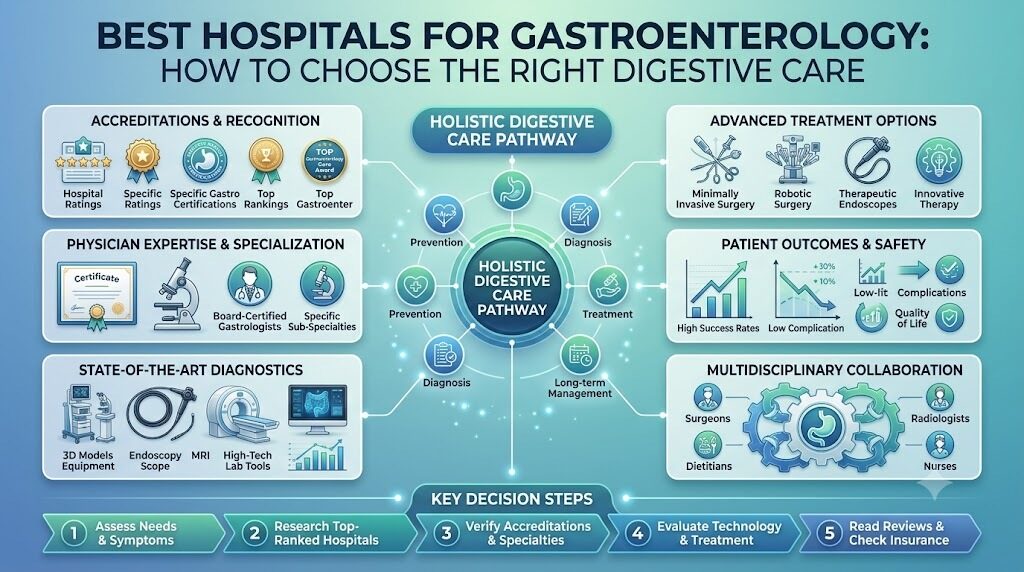
Finding the best hospitals for gastroenterology requires more than checking general reputation. Patients can first look at the specialist team and the services available for their type of digestive concern. A hospital may offer general gastroenterology but have limited services for certain complex conditions. Diagnostic facilities can also matter. Patients may check for endoscopy, colonoscopy, imaging, laboratory testing, and pathology support. They can also review liver, IBD, pancreas, and digestive surgery services. Follow-up care is another useful factor. Some digestive conditions may need ongoing specialist visits and monitoring. Patients can ask how different departments work together. GastroHospitals.com helps patients research hospitals and digestive healthcare services. It does not state that one hospital is suitable for everyone. Patients should compare relevant services and discuss their needs with a qualified doctor.
Table: What to Check in a Gastroenterology Hospital
| Factor to Check | What It Means | Why It Matters |
|---|---|---|
| Gastroenterologist team | Digestive specialists are available | Supports specialist evaluation |
| Diagnostic services | Tests and imaging are available | Helps doctors assess findings |
| Endoscopy unit | Digestive procedures are provided | Supports internal examinations |
| Liver care | Liver-focused services are offered | Helps with liver conditions |
| IBD care | Inflammatory bowel services are available | Supports ongoing IBD management |
| Surgical team | Digestive surgeons are available | Helps when surgery is considered |
| Follow-up support | Continued medical reviews are available | Supports long-term care |
| Specialist coordination | Multiple teams can work together | Helps with complex conditions |
Common Mistakes Patients Make
Patients may find digestive hospital research confusing at first. Avoiding common mistakes can make the process clearer.
- Choosing only by reputation: Reputation does not show every service a hospital provides.
- Ignoring specialist availability: Different conditions may need different types of specialists.
- Focusing only on equipment: Technology matters, but skilled teams matter too.
- Skipping service checks: Patients should know which digestive services are available.
- Forgetting follow-up care: Some conditions require continued medical monitoring.
- Comparing only prices: Cost does not describe the complete care system.
- Expecting guaranteed outcomes: Medical outcomes can vary between patients.
- Using online content as diagnosis: Online information cannot replace professional evaluation.
- Not preparing questions: Questions can help patients understand their care options.
- Delaying medical review: Persistent or concerning symptoms should be discussed with a doctor.
A Simple Example
This is a fictional example. Imagine a patient who needs evaluation for a digestive concern. The patient starts searching for the best hospitals for gastroenterology and finds several hospitals with different services. The patient creates a simple checklist before making any decision. The checklist includes a gastroenterologist, diagnostic testing, endoscopy, liver services, IBD support, and surgical care. The patient also checks whether follow-up services are available. GastroHospitals.com can support this early research by helping patients explore digestive healthcare services. The patient then prepares questions for a qualified doctor and discusses the available options. This example shows why patients should compare useful services rather than focus on one hospital name. The final healthcare choice should be based on professional medical advice and individual needs.
How GastroHospitals Can Help
GastroHospitals is a digestive-health discovery and education platform. It helps patients and families explore information about gastroenterology hospitals and digestive services. The platform covers the esophagus, stomach, intestines, colon, liver, gallbladder, and pancreas. It also covers services related to endoscopy, colonoscopy, IBD, liver care, and gastrointestinal surgery. Patients can use this information to understand different areas of digestive healthcare. This may help them prepare questions before meeting a medical team. GastroHospitals.com does not promise a specific medical result. It also does not claim that one hospital is the right choice for every patient. Its purpose is to support general healthcare research and education. Patients should always use qualified medical advice when making decisions about diagnosis or treatment.
Frequently Asked Questions About Choosing Digestive Care
1. How should I compare the best hospitals for gastroenterology?
The best hospitals for gastroenterology can vary based on patient needs. Check specialist teams, diagnostic services, endoscopy, surgery, and follow-up support. Also look for services related to the condition being evaluated. A qualified doctor can explain which hospital services may be important for a particular situation.
2. What does a gastroenterologist treat?
A gastroenterologist treats conditions affecting the digestive system. This includes the stomach, intestines, colon, liver, and pancreas. They may review symptoms, medical reports, and test results. They can also explain whether further testing or specialist treatment may be needed.
3. What are common gastroenterology treatments?
Gastroenterology treatments can include medical care, monitoring, endoscopy, nutrition support, and surgery. The choice depends on the condition and medical findings. Patients should ask their doctor what a treatment is intended to address and what follow-up may be needed.
4. What is gastroenteritis treatment?
Gastroenteritis treatment depends on the cause and the patient's overall health. Doctors may assess symptoms before deciding on care. Similar symptoms can have different causes. Persistent or concerning symptoms should be evaluated by a qualified healthcare professional.
5. What can GERD treatment include?
GERD treatment may include lifestyle changes, medicines, monitoring, procedures, or surgery in selected cases. The choice depends on the medical situation. A gastroenterologist can explain the available options and why a specific approach may be considered.
6. What is involved in IBD treatment?
IBD treatment can include medicines, monitoring, nutrition support, procedures, or surgery. Crohn's disease and ulcerative colitis can affect people differently. A gastroenterologist can assess the condition and explain the role of different treatment options and follow-up.
7. What does liver disease treatment involve?
Liver disease treatment depends on the type and severity of the liver condition. It may include monitoring, medical care, specialist review, or advanced treatment. A gastroenterologist or liver specialist can explain the evaluation process and possible care options.
8. Why is a colonoscopy procedure performed?
A colonoscopy procedure allows a doctor to examine the inside of the colon. It may help investigate certain bowel concerns or examine changes found during medical evaluation. The reason varies between patients. Doctors can explain why the procedure is being recommended.
9. When may gastrointestinal surgery be needed?
Gastrointestinal surgery may be considered when an operation is appropriate for a digestive condition. It can involve different organs and procedures. Doctors assess the medical situation before recommending surgery. Patients should ask about possible alternatives, risks, and follow-up care.
10. How can GastroHospitals.com help patients?
GastroHospitals.com helps patients research digestive healthcare services and hospital specialties. It covers areas such as gastroenterology, endoscopy, liver care, IBD, and gastrointestinal surgery. It is designed for general education and discovery. It does not replace advice from a qualified gastroenterologist or doctor.
Final Thoughts
Digestive care can involve many specialists, tests, procedures, and follow-up services. Understanding these areas can help patients prepare before choosing a hospital. The best hospitals for gastroenterology can differ because healthcare needs are not the same for everyone. A gastroenterologist can explain digestive conditions and possible treatment choices. Learning about gastroenterology treatments, gastroenteritis treatment, GERD treatment, and IBD treatment can help patients ask better questions. Information about liver disease treatment, the colonoscopy procedure, and gastrointestinal surgery can also support useful discussions with doctors. GastroHospitals.com provides general digestive healthcare information for research and education. It does not guarantee treatment results or replace medical care. Always consult a qualified gastroenterologist or doctor for advice about your own health.