Bodh Gaya Travel Guide: Uncovering Bihar’s Ancient Cradle of Enlightenment
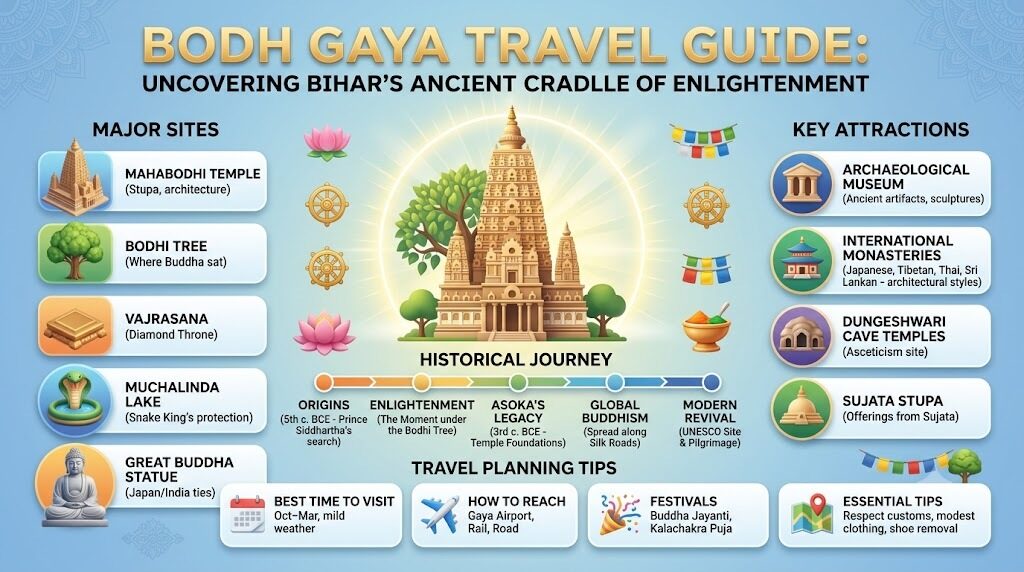
Introduction
Long before it became a focal point for global spiritual travel, the tranquil countryside along the Phalgu River was known as Uruvela—a rural pocket of ancient Magadha where philosophical seekers gathered to ponder existence. It was beneath a native fig tree here that Siddhartha Gautama meditated through the night and attained supreme awakening. Today, Bodh Gaya stands as an international crossroads where eastern philosophy, deep history, and diverse global architecture converge in the heart of Bihar.
Stepping into Bodh Gaya means encountering two distinct worlds at once: an active open-air museum of ancient Indian brickcraft and a cosmopolitan sanctuary where monks from around the globe chant in their native tongues. Navigating this unique landscape effectively requires more than a simple list of sights—it takes a solid understanding of regional transit, seasonal patterns, and local etiquette. At Mera Apna Bihar, our mission is to deliver practical, grounded insights that help curious travelers explore Bihar’s cultural heartland with confidence and ease.
Understanding Bodh Gaya: A Geographic and Cultural Overview
Located roughly 12 kilometers south of Gaya’s urban center, Bodh Gaya occupies a quiet, green plain in southern Bihar. While Gaya proper has served for centuries as a major center for Vedic ancestral rituals (Pind Daan), Bodh Gaya developed its own identity as a sanctuary of international reflection.
What surprises most first-time visitors is the town's international layout. Over the past century, nations with deep Buddhist traditions—such as Japan, Thailand, Bhutan, Tibet, Myanmar, and Sri Lanka—have built permanent embassies of faith here. Each compound is designed according to its home country’s traditional building practices, creating a fascinating architectural tour across Asia, all within walking distance of one another.
Historical Significance and Architectural Evolution
The Royal Legacy of Ashoka and Beyond
Bodh Gaya’s documented architectural timeline begins in the 3rd century BCE. Following his embrace of the Buddha's teachings, Emperor Ashoka journeyed to the site, marking it with a commemorative stone pillar and a simple protective shrine. Subsequent patrons during the Shunga, Kushan, and Gupta dynasties expanded the sacred footprint, adding intricate sandstone railings and expanding the core shrine into a towering brick sanctuary.
A Masterpiece of Early Brick Construction
The centerpiece of the complex—the Mahabodhi Temple—is one of India's rare surviving early brick structures. Rising over 50 meters into the sky, its straight-edged pyramidal spire (shikhara) features delicate plaster relief work, niche statues, and corner turrets. The building style heavily influenced religious architecture across East Asia for centuries to come.
Essential Sights in Bodh Gaya
1. The Mahabodhi Temple Sacred Enclosure
Recognized globally as a UNESCO World Heritage Site, this complex serves as the spiritual heart of the town. Inside the central shrine chamber sits a gilded figure of the Buddha depicting the moment he called the earth to witness his awakening.
The Bodhi Tree (Ficus religiosa): Growing directly behind the main temple, this sprawling fig tree is a direct descendant of the original tree under which the Buddha sat. Historical records note that a cutting was carried to Sri Lanka by Ashoka’s daughter, Sanghamitta; centuries later, a sapling from that Sri Lankan tree was replanted at this precise spot.
Vajrasana (The Diamond Seat): Positioned between the temple wall and the tree trunk, this polished red sandstone slab was placed by Emperor Ashoka to mark the exact point of enlightenment.
The Seven Sacred Weeks Trail: Scattered across the temple gardens are marked locations commemorating the seven weeks the Buddha spent nearby post-enlightenment, including the Animesh Lochan Chaitya (where he stood gazing at the tree in gratitude) and the Ratnachakrama (a raised walk lined with carved stone lotuses).
2. The Great Buddha Statue (Daibutsu)
Unveiled in the late 20th century, this 80-foot-tall statue depicts the Buddha seated in deep meditation. Crafted from solid sandstone blocks and red granite trim, it stands amid manicured lawns, serving as one of the town's most striking visual landmarks.
3. The Enclave of International Monasteries
Exploring Bodh Gaya's foreign temples offers a masterclass in Asian architectural diversity:
Indosan Nipponji (Japanese Temple): Designed with clean wood lines and understated elegance, featuring interior wall frescoes depicting key moments from the Buddha’s life.
Thai Royal Monastery: Built with steeply pitched, gold-tipped roofs and polished wooden floors, surrounded by formal gardens and water features.
Bhutanese & Tibetan Shrines: Colorful compounds adorned with hand-painted murals, intricate thangka tapestries, large prayer wheels, and rows of fluttering prayer flags.
4. Bodh Gaya Archaeological Museum
For history lovers, this quiet museum is essential. It houses a curated collection of original stone railings, sculpted panels, yakshi figures, and ancient coins excavated around the temple grounds, tracing the site's evolution from the Shunga era to the medieval period.
Regional Culture, Language, and Local Life
While Bodh Gaya hosts an international population, its day-to-day life remains rooted in traditional Bihari culture.
Linguistic Blend: The primary local dialect spoken in homes and market stalls is Magahi, alongside standard Hindi. However, because of decades of tourism, local auto drivers, tour guides, and shop owners often speak conversational English, along with functional phrases in Thai, Japanese, or French.
Local Crafts: Markets around the temple complex feature stone carvings, wooden beads, brass incense burners, and regional artwork such as Tikuli glass craft and Madhubani paintings.
Major Events and Seasonal Festivals
Buddha Purnima (Vaishakha Full Moon): Occurring in April or May, this is the most vibrant period in Bodh Gaya. Thousands of pilgrims assemble for morning processions, group meditations, and nighttime candle-lighting ceremonies around the main spire.
The Winter Gathering (October to February): During the cooler months, global spiritual leaders, scholars, and monastic orders assemble for teachings, peace conferences, and daily prayer recitations.
Pitru Paksha Fortnight: Centered along the river ghats in nearby Gaya every autumn, this traditional period brings millions of pilgrims to the district, filling hotels and transport routes across the region.
Comparative Guide to Key Destinations
| Site | Main Focus | Typical Visit Time | What Makes It Unique |
| Mahabodhi Temple | Sacred History & UNESCO Site | 2–3 Hours | Ancient brick spire, Bodhi Tree, Vajrasana |
| Great Buddha Statue | Monumental Art | 30–45 Mins | 80-foot sandstone sculpture set in quiet gardens |
| Thai Monastery | Southeast Asian Architecture | 30–45 Mins | Distinctive sloping gold gables and manicured lawns |
| Japanese Temple | Minimalist Design & Murals | 30–45 Mins | Traditional wooden architecture and inner wall art |
| Archaeological Museum | Antiquities & Relics | 1–2 Hours | Original ancient stone railings and carved artifacts |
| Dungeshwari Caves | Pre-Enlightenment History | 2.5 Hours (total) | Hilltop cave shrines where Gautama practiced austerities |
Step-by-Step Travel Itineraries
1-Day Highlights Tour
Morning: Begin at 6:30 AM at the Mahabodhi Temple complex to experience the morning chanting. Spend two hours exploring the Bodhi Tree, Vajrasana, and garden walkways.
Midday: Visit the Archaeological Museum, followed by lunch at a local restaurant.
Afternoon: Tour the Great Buddha Statue, the Thai Monastery, and the Japanese Temple.
Evening: Return to the Mahabodhi courtyard at sunset to watch the illumination of butter lamps and enjoy the quiet evening air.
2-Day Cultural and Heritage Tour
Day 1: The Core Sacred Circuit
Morning: Complete tour of the Mahabodhi Temple complex and adjacent sacred gardens.
Afternoon: Explore Muchalinda Lake, followed by visits to the Tibetan and Bhutanese monasteries.
Evening: Browse local handicraft stalls and sample local snacks along the market streets.
Day 2: Excursions and Heritage
Morning: Hire a auto-rickshaw for a trip to the Dungeshwari Cave Temples (12 km away) to take in the hilltop views and ancient cave shrines.
Afternoon: Head into Gaya city to view the historic Vishnupad Temple complex and the Phalgu River ghats.
Evening: Return to Bodh Gaya for a relaxed final dinner.
Logistics: How to Get There and Get Around
By Air: Gaya Airport (GAY) is located just 10 kilometers away, receiving direct seasonal flights from select international points as well as domestic connections. Alternatively, Patna’s Jayprakash Narayan Airport (PAT) is 115 kilometers north, offering extensive year-round domestic flights.
By Train: Gaya Junction (GAY) sits 13 kilometers north of Bodh Gaya and is a major rail station on the Grand Chord line, connecting directly to Delhi, Kolkata, Mumbai, Varanasi, and Patna.
Local Transport: Auto-rickshaws, shared vans, and taxis run constantly between Gaya Junction and Bodh Gaya. Walking is the best way to move between attractions within Bodh Gaya itself.
Seasonal Weather Guide
Regional Culinary Experiences
Visiting Bodh Gaya gives travelers a chance to sample authentic Bihari fare alongside diverse international cuisines:
Bihari Classics:
Litti Chokha: Wood-roasted wheat spheres filled with spiced sattu (roasted gram flour), dipped in pure ghee and served alongside roasted eggplant and tomato mash.
Sattu Sharbat: A savory, cooling summer drink made from roasted gram flour, lemon juice, roasted cumin, and salt.
Tilkut: A sweet, crunchy brittle made from sesame seeds and jaggery, famously produced in Gaya.
Global Options: Thanks to international visitors, local cafes near the main market serve fresh Tibetan momos, hot soups, Thai curries, and brewed teas.
Common Travel Mistakes to Avoid
Skipping Electronic Security Rules: Phones, smartwatches, and large bags are strictly prohibited inside the main Mahabodhi enclosure. Leave them in your hotel safe or use the official counter lockers near the entrance gate.
Underestimating Midday Summer Heat: Planning outdoor temple walks during May or June without water, hats, or footwear protection can be uncomfortable due to stone surfaces heating up quickly.
Overlooking Friday Museum Closures: The local Archaeological Museum is closed on Fridays; adjust your schedule accordingly.
Not Carrying Cash: While hotels and larger shops accept digital payments, small vendors, rickshaw drivers, and market stalls operate almost exclusively in cash.
Practical Safety and Etiquette Tips
Remove Shoes Promptly: Remove footwear at designated points before entering temple courtyards or monastery halls. Carrying a pair of socks helps on hot stone floors.
Dress Modestly: Out of respect for local customs, wear clothing that covers your shoulders and knees.
Walk Clockwise: When circumambulating stupas, shrines, or the central temple, walk in a clockwise direction.
Double-Check Fares: Agree on auto-rickshaw or taxi rates before starting your journey.
Key Takeaways
Spiritual Core: Bodh Gaya is the birthplace of Buddhist philosophy, centered around the UNESCO-listed Mahabodhi Temple and the sacred Bodhi Tree.
Architectural Diversity: Home to vibrant foreign monasteries representing styles from across Asia.
Best Time to Visit: The winter months from October to March offer the most comfortable weather and lively cultural events.
Transit Access: Easily reached via Gaya Railway Station (13 km), Gaya Airport (10 km), or Patna Airport (115 km).
Food Scene: Offers a mix of classic Bihari dishes (Litti Chokha, Tilkut) and international cafe options.
Frequently Asked Questions (FAQs)
1. What makes Bodh Gaya historically significant?
Bodh Gaya is the site where Siddhartha Gautama attained enlightenment beneath the Bodhi Tree, becoming the Buddha over 2,500 years ago. It remains one of the world's premier sacred destinations, featuring early Indian brick architecture, ancient stone carvings, and foreign monasteries.
2. How many days should I plan for a visit to Bodh Gaya?
A 2-day trip is usually ideal. It gives you enough time to explore the Mahabodhi Temple complex, visit several foreign monasteries, browse the Archaeological Museum, sample local cuisine, and take a quick trip to nearby sites like the Dungeshwari Caves.
3. What is the easiest way to reach Bodh Gaya?
The quickest route is flying into Gaya Airport (10 km away) or taking a train to Gaya Junction (13 km away). Regular taxis, private cars, and auto-rickshaws run continuously between Gaya Junction and Bodh Gaya.
4. Are mobile phones permitted inside the Mahabodhi Temple complex?
No, mobile phones, smartwatches, and certain electronic devices are not allowed inside the main temple compound to protect security and preserve a quiet environment. Free security lockers are available near the main entrance check-post.
5. What is the best season to travel to Bodh Gaya?
The cooler winter season from October to March is the best time to visit. Days are pleasant, outdoor walks are comfortable, and international monastic events take place throughout the town.
6. What local dishes should visitors try in the area?
Be sure to try traditional Bihari foods like Litti Chokha and refreshing Sattu Sharbat, along with Gaya’s famous sesame sweet, Tilkut. Many local cafes also serve Tibetan momos, hot soups, and Asian dishes.
7. Are there other major sites near Bodh Gaya worth visiting?
Yes. Key nearby attractions include the Dungeshwari Cave Temples (12 km away), the historical riverfront ghats and Vishnupad Temple in Gaya city (13 km away), and the ancient heritage sites of Rajgir and Nalanda (approx. 80–90 km north).
8. Can non-Buddhists enter the temples and monasteries?
Yes, visitors of all backgrounds are welcome at the Mahabodhi Temple complex and foreign monasteries. Guests are simply asked to dress modestly, remove footwear where required, and maintain respectful silence.
9. Is Bodh Gaya easy to explore on foot?
Yes, the core area of Bodh Gaya—including the main temple, market streets, Great Buddha Statue, and foreign monasteries—is compact and easy to walk through. Auto-rickshaws are readily available for longer trips, such as visiting the museum or traveling to Gaya.
10. How does Mera Apna Bihar assist travelers planning trips in the region?
Mera Apna Bihar offers practical travel guides, verified transport advice, historical context, and realistic itineraries designed to help readers explore Bihar’s rich heritage, local culture, and food traditions smoothly.
Conclusion
Bodh Gaya is far more than a simple pin on a travel map; it is a quiet, living testament to human history, philosophy, and global community. From the impressive brick architecture of the Mahabodhi spire to the colorful foreign monasteries, every step through this historic landscape brings you face-to-face with stories that have shaped world culture for millennia.Whether you come to explore ancient brickcraft, photograph unique global architecture, or enjoy authentic Bihari dishes, proper planning ensures a smooth and memorable journey. Explore more regional destination guides, transport tips, and travel stories on Mera Apna Bihar as you get ready to discover the heart of Bihar.